Who they are
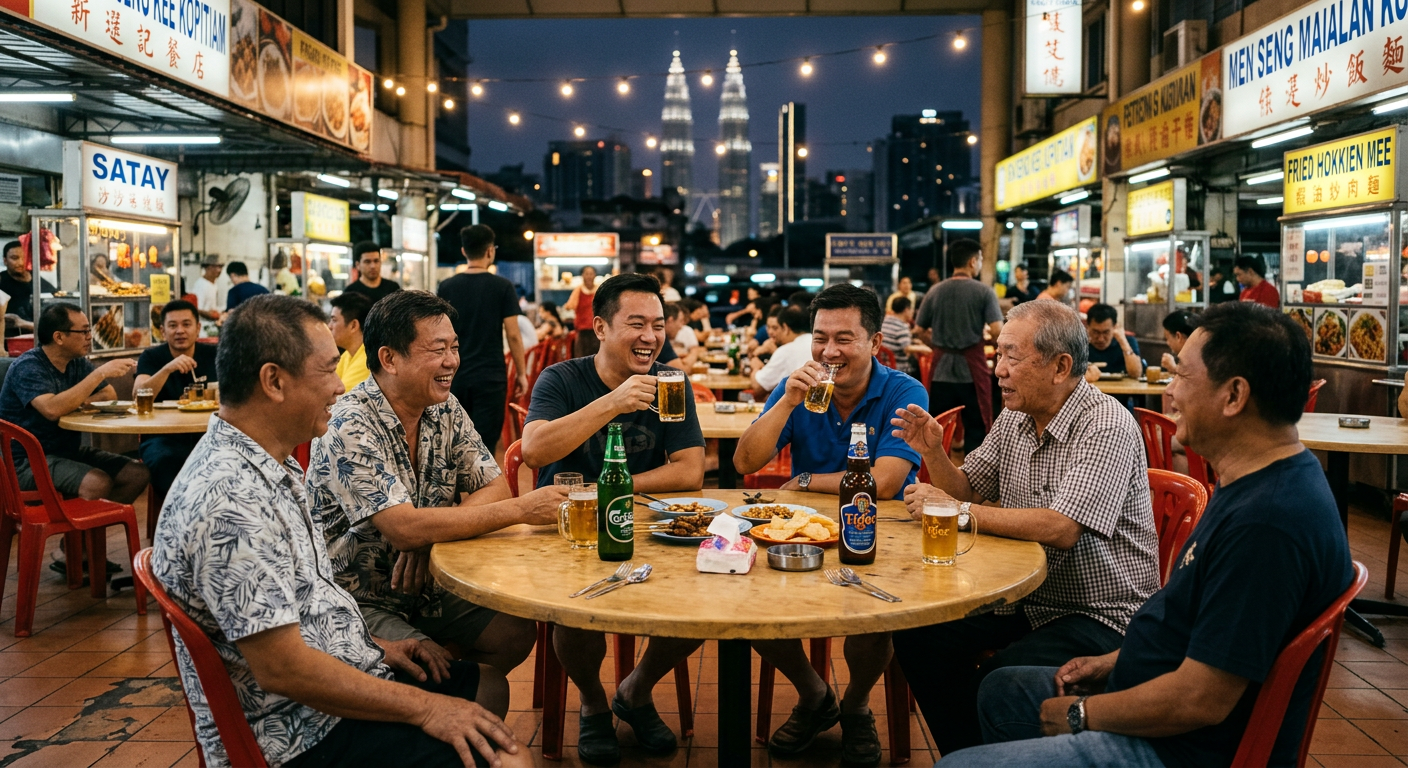
Beer drinkers in Malaysia are a younger, urban, socially active segment whose identity centres on entertainment, discovery, and community. They are not defined by the beverage so much as the lifestyle that surrounds it: going out, socialising, experiencing new things, and being engaged with both digital culture and the physical world around them.
They skew younger than most segments in the study, with 34% Gen Z and 31% Millennials — a combined 65% under 40. The gender split is 56% male, with a significant 44% female minority.
Their household structure is distinctive. 35% live in multi-generational family households — the highest of any segment — which means they are often in larger family environments rather than nuclear family or single-person homes. This shapes their social habits and their spending priorities.
Geographically they are the most urban of all the segments studied. 44% live in cities with more than one million inhabitants, and when you add medium-sized cities the proportion rises further. They are city people.
What they care about
When asked what matters most in life, having a good time ranks at 47% — the highest score of any segment in the study. Learning new things leads at 55%. These are not the security-and-family priorities of older segments. Beer drinkers are in a life stage where experience and self-discovery still dominate.
Their interests reflect this. Politics and current world events leads at 74%, which is strikingly high for a consumer segment. Vehicles and mobility scores 68%, movies and TV at 59%, and sports at 46%. They are socially aware, culturally engaged, and interested in the world beyond their immediate environment.
As a hobby, traveling takes the top spot at 68% — the highest of any segment in the study. Video gaming scores 47% as a hobby, photography 39%, and cars and vehicles 35%. This is an active, exploratory cohort.
On shopping behaviour, they are notably loyal. 80% say they always shop at the same stores — the highest store loyalty score in the entire study. But they are not passive loyalists: 79% find customer reviews helpful, 75% actively look out for special offers. They are loyal but informed, and they look for a reason to stay rather than a reason to leave.
Health consciousness is present: 69% avoid artificial flavours and preservatives, and 54% actively try to eat healthy. Food quality matters to them.
On national concerns, crime leads at 73%, followed by the economic situation at 71% and poverty at 67%. Education scores 53%. They are concerned about the country around them, not just their personal circumstances.
Where to reach them
The channels that work
Online stores are the strongest digital advertising channel for beer drinkers at 69% ad recall — well above average. They encounter brands in e-commerce environments and they act on it. If you sell a product online, this is your primary channel for reaching this segment.
Social media is the second strongest at 62%. This is a segment that follows companies (69%), likes posts (55%), and comments on posts (40%) at above-average rates. They are not passive scrollers — they engage.
Websites and apps of brands (65%) and video streaming services (60%) also perform well. They discover brands through brand digital environments and through video content.
On non-digital, in-store advertising is the strongest at 57%, followed closely by mailshots at 54% and printed magazines at 49%. They encounter brands physically, and they respond to point-of-sale environments.
The channels that underperform
Daily newspapers are a clear veto. Only 15% read them weekly, compared to 24% for the average consumer. Similarly, weekly newspapers at 19% are well below average. Your print budget belongs elsewhere for this segment.
Device reality
Gaming consoles are the defining device: 87% use one to access the internet, compared to an average of 38%. This is the single most distinctive device characteristic of any segment in the study. They are not just phone users — they are in a gaming ecosystem that most brands never reach.
Smartphone is universal at 99%. Desktop PC at 64% and laptop at 69% are both above average, suggesting professional and creative use alongside entertainment.
What to do
Loyalty programmes are unusually powerful for this segment. 80% always shop at the same stores. They want to stay with a brand they trust. Once you have them, you have them — but only if you give them a reason to stay. Loyalty points, exclusive access, and personalised recommendations will keep them.
Customer reviews are a critical conversion tool. 79% find customer reviews helpful. Your product page must have reviews, ratings, and social proof visible and prominent. This is not optional for this segment.
Gaming environments are an untapped channel. 87% gaming console ownership is exceptional. If your product has any gaming adjacency — even loosely — this is where you can reach beer drinkers in an engaged context rather than an advertising interrupt.
Music and entertainment-first content will outperform brand messaging. With 89% weekly digital music consumption and 74% interest in politics and current events, this segment consumes cultural content voraciously. Branded content that sits inside music, entertainment, or cultural contexts will reach them more effectively than display advertising.
What not to do
Do not assume this segment is price-driven despite the deal-seeking behaviour. 80% store loyalty is the defining shopping trait. They are not constantly looking for the cheapest option — they are looking for the best option at a store they trust. A race to the bottom on price will not win them.
Do not ignore the female minority. 44% of beer drinkers are female. They share many of the same habits — gaming, music, social media engagement — but may respond to different creative angles and product categories.
Do not invest in printed newspapers. 15% weekly readership is the veto signal. Even if your category is relevant, this channel will not reach them.
Do not treat gaming console ownership as a proxy for hardcore gamers. The beer drinker gaming profile is social and lifestyle-oriented, not necessarily competitive. Gaming-adjacent marketing for this segment should feel entertainment-first, not subculture-first.