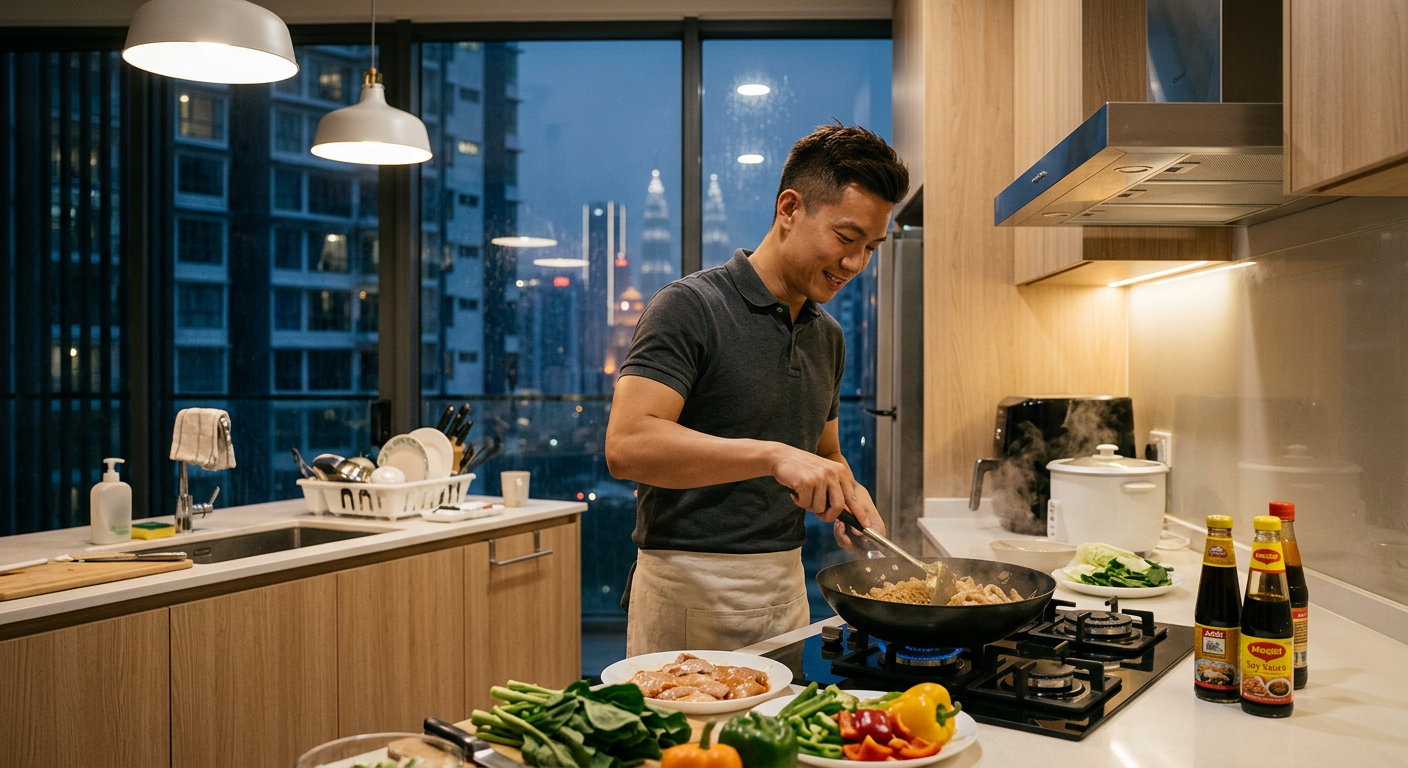
Who they are
Single households in Malaysia live alone — by choice, circumstance, or necessity. They are the youngest, most Gen Z-heavy segment in the study, with distinctive budget constraints and an autonomy-first value system. They are not a family unit; they are an individual navigating consumer culture independently.
45% are Gen Z — the highest of any segment. Another 31% are Millennials. They are young adults, many in early career stages, for whom living alone is either a preference or an economic necessity.
56% are male, 44% female. The gender balance is more even than other household types, reflecting a generation that is more gender-balanced in its living arrangements.
47% have low household income — the highest concentration of any segment. Living alone is expensive; this is a budget-constrained segment that may be living alone by necessity rather than preference.
100% live in single-person households by definition.
29% live in rural communities — the highest rural concentration of any segment. They are the least urban of all segments, more likely to live in small towns and rural areas than any other group.
What they care about
Having a good time leads at 47% and making my own decisions at 47%. They are autonomy-first consumers who prioritise personal freedom and enjoyment. To be successful scores 44% and a happy relationship scores 34% — below average, consistent with their single status.
Their interests are cultural and creative. Movies, TV shows, and music leads at 59%, science and technology at 54%, and fashion and beauty at 46%. They are culturally engaged consumers who invest in entertainment and self-expression.
Photography is their top hobby at 41% — notably above average and distinctive. Doing sports and fitness at 47% and traveling at 38% round out an active, creative leisure profile.
36% make spontaneous in-store purchases — below average, which is surprising for a young, autonomy-oriented segment. They are actually more planned than spontaneous shoppers.
On national concerns, poverty leads at 68%, crime at 63%, and the economic situation at 59%. Notably, the economic situation at 59% is the lowest of any segment — they are less economically anxious than other segments, possibly because they have lower expectations or fewer financial responsibilities.
They have left-leaning political views at 17% — the lowest of any segment. They are politically moderate or conservative rather than left-leaning.
Where to reach them
The channels that work
Social media is the strongest channel: single households like posts by other users more often than average. They are engaged social media observers and sharers. Social media advertising and organic social presence are effective.
Mail is the strongest traditional channel: they remember getting ads by mail at above-average rates. Direct mail and catalogues reach this rural and urban segment.
They consume digital music and video streaming at above-average rates — audio and video platforms are effective channels.
The channels that underperform
TV is a veto: single households watch TV less often than average and have below-average TV ad recall. Broadcast television is not effective for this segment.
Online stores are a veto: they remember seeing ads in online stores less often than average. E-commerce advertising is less effective for this segment.
Device reality
Smartphone at 95% is near-universal. Desktop PC at 59% and laptop at 63% are both slightly above average. Gaming console at 29% is average.
What to do
Social media advertising is your most effective channel. Their high social media engagement and social media usage means paid social, influencer marketing, and social content partnerships are effective.
Single-person and solo-use product positioning may resonate. As single-person households, they may respond to single-serve products, solo travel, individual insurance, and one-person household solutions.
Photography and creative hobbies are a distinctive channel. 41% photography hobby means camera brands, photography services, and creative platforms have a natural audience in this segment.
Rural marketing should not overlook this segment. 29% rural concentration means rural brands, agricultural products, and local businesses should not ignore this high-Gen Z segment.
What not to do
Do not use TV advertising to reach this segment. Below-average TV viewership and ad recall make broadcast television ineffective for this segment.
Do not assume single households are urban. 29% rural concentration is the highest of any segment. They are the least urban segment studied.
Do not position products requiring family or household decision-making. As solo decision-makers with no family to consider, they are not responsive to family-oriented marketing messages.