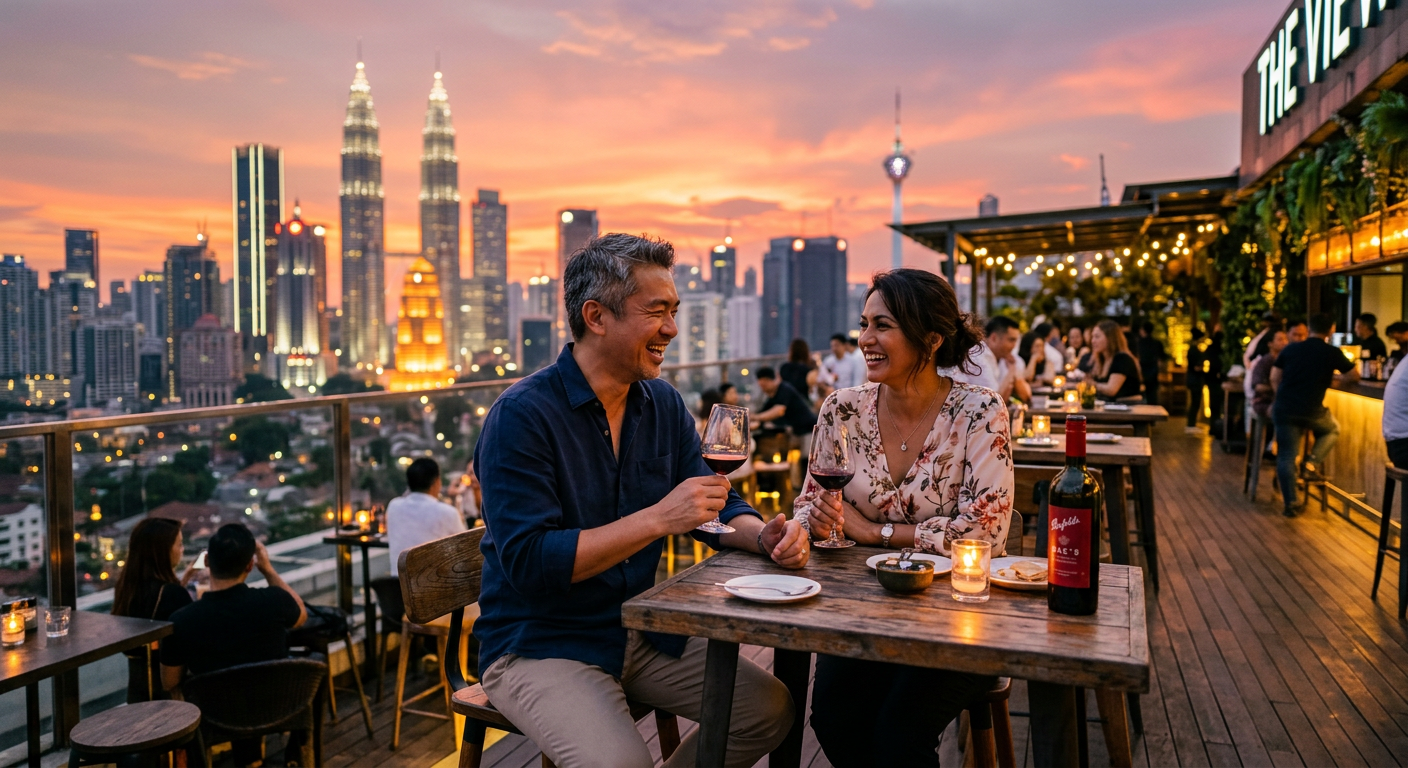
Who they are
Wine drinkers in Malaysia are a small but high-value segment — just 100 respondents in the study, but disproportionately influential as an aspirational consumer group. They are younger than the wine stereotype suggests, highly educated, high-income, and deeply engaged with food, travel, and health culture. They are the intersection of premium lifestyle and mainstream Millennial behaviour.
52% are Millennials, which is the largest generational share. Another 31% are Gen X. This is not an older, conservative wine consumer — it is a younger, lifestyle-oriented wine drinker who sees wine as part of a broader healthy, culturally engaged lifestyle.
56% are male, 44% female. The gender split is more balanced than other alcohol segments, with a notable female minority that wine brands should not overlook.
60% have high household income — the highest of any beverage segment and notably higher than beer or cigarette smokers. They are a premium segment with significant disposable income for wine, food, travel, and lifestyle categories.
39% live in nuclear family households and 29% in couple households. They are family-oriented consumers, often married or partnered with children or planning for family life.
44% live in cities with over 1 million inhabitants — the most urban of the beverage segments. They are concentrated in Kuala Lumpur and other major urban centres where wine culture, restaurants, and premium retail are most developed.
What they care about
Having a good time leads their life values at 55% — above average and notably higher than beer drinkers or smokers. Learning new things scores 43% and making my own decisions 50%. They are experience-seekers who value enjoyment and autonomy.
Health and fitness leads their interests at 76% — the highest score of any beverage segment and one of the highest of any segment in the study. Food and dining at 75%, travel at 72%, and movies, TV, and music at 63% show a lifestyle-integrated interest profile.
This is a segment that drinks wine as part of a broader health-conscious, experience-oriented lifestyle — not as an isolated habit or social ritual.
Their attitudes are health-conscious: 47% try to eat less meat, 81% actively try to eat healthy, and 47% avoid artificial flavours and preservatives. They are the most health-conscious of the alcohol consumer segments.
Traveling is their top hobby at 73% — the highest of any beverage segment and well above the average consumer. Doing sports and fitness at 52% and cooking and baking at 47% show an active, health-oriented leisure profile.
On national concerns, the economic situation leads at 76%, followed by poverty at 72% and crime at 66%. They are civic-minded consumers concerned about the country’s direction.
They have left-leaning political views above average — the most left-leaning of the alcohol segments, consistent with their social liberal orientation.
Where to reach them
The channels that work
Cinema is the standout channel: wine drinkers remember seeing ads at the movies and cinema more often than the average consumer — the highest cinema ad recall of any beverage segment. Theatre advertising and film partnerships are effective for reaching this segment.
Brand websites and apps are the second-strongest channel: above-average ad recall on brand digital environments. They research brands online and convert through brand websites.
Social media is the third-strongest channel: they interact with companies on social media more than average. They follow brands, engage with content, and share recommendations.
They consume all types of media more frequently than average — the most media-engaged of the beverage segments. Radio, print, video streaming, and digital music all perform well.
The channels that underperform
Daily newspapers at 15% and weekly newspapers at 16% are veto channels — below average and not effective for reaching this segment.
Gaming console at 21% is notably below average.
Device reality
Smartphone at 95% is near-universal. Desktop PC at 69% and laptop at 67% are both above average. Smart TV at 69% is also above average, consistent with their heavy video and streaming consumption.
What to do
Cinema and video streaming advertising works for this segment. Highest cinema ad recall of any beverage segment means theatrical releases, film sponsorships, and cinema advertising are effective channels for reaching this premium audience.
Food and wine co-marketing opportunities are strong. 75% interest in food and dining and 76% interest in health and fitness means restaurant partnerships, food media collaborations, and culinary experiences are effective ways to reach this segment.
Travel and lifestyle brand partnerships align with this segment’s identity. 73% traveling as a hobby and 72% interest in travel means travel brands, hotel partnerships, and lifestyle tourism content will resonate.
Health positioning is critical for this segment. They are the most health-conscious of the alcohol segments — 47% try to eat less meat and 81% try to eat healthy. Wines marketed with organic, low-sulfite, or health-adjacent credentials will outperform conventional wine marketing.
What not to do
Do not position wine as unhealthy for this segment. Their health and fitness orientation means they are likely to moderate consumption or choose lower-alcohol, organic, or health-positioned wine options. Conventional wine marketing that emphasises indulgence over health may not resonate.
Do not invest in printed newspapers. 15% daily newspaper readership is a veto signal for this segment. This channel will not reach them.
Do not ignore the female minority. 44% female wine drinkers represent a significant audience for female-targeted wine marketing, food and wine pairing content, and health-focused wine positioning.